Korte samenvatting: Machine learning is een integraal onderdeel geworden van moderne militaire operaties en vormt de basis voor autonome wapensystemen, inlichtingenanalyse en besluitvorming op commandoniveau. Toepassingen variëren van voorspellende logistiek en doelherkenning tot cyberdefensie en operationele evaluatie. Deze systemen roepen echter cruciale vragen op over nauwkeurigheid, ethische inzet, menselijk toezicht en geopolitieke stabiliteit, nu landen zich haasten om AI in hun defensiecapaciteiten te integreren.
Moderne oorlogsvoering is in toenemende mate afhankelijk van kunstmatige intelligentie. Machine learning-algoritmen verwerken tegenwoordig sensorgegevens, identificeren doelen en ondersteunen strategische beslissingen in elk domein: lucht, land, zee, cyber en ruimte.
Maar er is een probleem: naarmate defensieafdelingen wereldwijd de invoering van machine learning versnellen, brengt deze technologie zowel ongekende mogelijkheden als complexe risico's met zich mee waar militaire planners rekening mee moeten houden.
Kerntoepassingen van machinaal leren in het leger
Machine learning heeft zijn weg gevonden naar vrijwel elk aspect van defensieoperaties. De toepassingen strekken zich uit over tactisch, operationeel en strategisch niveau.
Autonome wapen- en gevechtssystemen
De XQ-58A Valkyrie is een prominent voorbeeld van door machine learning mogelijk gemaakte autonomie. Dit onbemande vliegtuig, dat voor het eerst werd gedemonstreerd in 2019, fungeert als een "trouwe wingman" voor bemande gevechtsvliegtuigen, verdedigt ze en voert offensieve acties uit die anders een risico zouden vormen voor menselijke piloten.
Het systeem vertegenwoordigt een kosteneffectieve benadering van autonome gevechtsplatformen. De productiecapaciteit zou enkele honderden eenheden per jaar bedragen, wat de aannames over de samenstelling van strijdkrachten fundamenteel verandert.
Het experimentele X-62 VISTA-vliegtuig van de luchtmacht maakt gebruik van machine learning en gespecialiseerde software om autonoom luchtgevechtsvliegen te testen. Deze systemen volgen niet alleen voorgeprogrammeerde regels, maar passen zich in realtime aan het gedrag van de tegenstander aan.
Inlichtingenanalyse en operationele beoordeling
Onderzoek van RAND toont aan hoe machine learning de beoordeling van militaire operaties ondersteunt door systematisch inzichten te halen uit inlichtingen, operationele gegevens en mediaverslagen. Deze aanpak biedt commandanten vrijwel realtime inzichten uit databronnen – vaak de beste informatiebron over de effectiviteit van operaties – die objectief en statistisch relevant zijn.
Traditionele inlichtingenanalyses overspoelen menselijke analisten met data. Machine learning verlicht die last door enorme hoeveelheden sensorgegevens te doorzoeken en bruikbare informatie naar boven te halen.
Commando-, controle- en beslissingsondersteuning
Het project 'Kunstmatige intelligentie en gedistribueerde commandovoering van de volgende generatie' heeft als doel om de komende vier jaar ongeveer 1.400.990 miljoen dollar te besteden. Deze systemen versnellen militaire commandovoering, doeldetectie en -aanval, elektronische oorlogvoering en communicatie.
Recent onderzoek van King's College London heeft aangetoond dat geavanceerde AI-modellen zich bezighouden met verfijnd gedrag wanneer ze in een strategische competitie worden geplaatst. Tijdens 329 beurten van een gesimuleerde nucleaire crisis produceerden de modellen ongeveer 780.000 woorden aan strategische redeneringen – meer dan Oorlog en Vrede en de Ilias samen, en ruwweg drie keer zoveel als het totale aantal vastgelegde beraadslagingen van Kennedy's Uitvoerend Comité tijdens de Cubaanse raketcrisis.
Desondanks varieerde de prestatie van de modellen sterk tussen verschillende AI-systemen en omstandigheden, waarbij sommige onder strategische druk betere resultaten lieten zien dan andere.

Ontdek militaire ML-toepassingen met AI Superior
In militaire en defensiegerelateerde omgevingen wordt vaak gewerkt met grootschalige operationele data, simulaties, monitoringsystemen en analytische workflows. AI Superior Kan machine learning-projecten ondersteunen die zich richten op data-analyse, voorspellende modellering, classificatie en onderzoeksgerichte analytische workflows in complexe operationele omgevingen.
AI Superior kan machine learning-werkzaamheden op defensiegebied ondersteunen door:
- Evaluatie van operationele en simulatiegegevenssets
- Ontwikkeling van voorspellende en analytische ML-modellen
- Het opzetten van workflows voor proof-of-concept-onderzoek
- Patroonanalyse en anomaliedetectie in gestructureerde datasets
- Validatie van de betrouwbaarheid van het model en de analytische consistentie
- Integratieplanning voor interne analyseomgevingen
👉Neem contact op met AI Superior om de projectstructuur en de technische doelstellingen te bespreken.
Test-, evaluatie- en veiligheidsuitdagingen
Hier wordt het ingewikkeld. Het Joint Artificial Intelligence Center heeft contracten toegekend aan 79 leveranciers voor de ontwikkeling van test- en evaluatietechnologie, met een maximale contractwaarde van $15 miljoen per leverancier. De ontwikkeling van test- en verklaarbaarheidstools voor militaire AI-toepassingen vormt een van de belangrijkste uitdagingen voor deze technologie.
De huidige beoordelingen van de technologische gereedheid houden geen rekening met cruciale, AI-specifieke factoren. Het eindrapport van de Nationale Veiligheidscommissie voor Kunstmatige Intelligentie benadrukt dat het bereiken van acceptabele AI-prestaties vaak inhoudt dat bepaalde risiconiveaus begrepen en geaccepteerd moeten worden.
Foutpercentages en implementatiedrempels
Context is enorm belangrijk. Een foutenpercentage van 5% kan erop wijzen dat een AI-systeem niet klaar is voor de besturing van dodelijke wapens, terwijl een hallucinatiepercentage van 10% kan duiden op een ongeschiktheid voor taken zoals het samenvatten van inlichtingen.
| Toepassingscontext | Aanvaardbaar foutenpercentage | Primair risico |
|---|---|---|
| Controle op dodelijke wapens | ~5% maximum | Burgerslachtoffers, broedermoord |
| Samenvatting van inlichtingen | ~10% hallucinatiedrempel | Misinformatie, gebrekkige beslissingen |
| Logistieke optimalisatie | Hogere tolerantie | Leveringsvertragingen, inefficiëntie |
| Detectie van cyberdreigingen | Valse positieve afwegingen | Gemiste aanvallen versus alertheidsmoeheid |
Op 22 maart 2003 vuurden Amerikaanse troepen een Patriot-onderscheppingsraket af op wat zij aannamen een Iraakse antiradarraket te zijn. Op aanbeveling van hun computergestuurde wapensysteem vernietigden ze echter een Tornado-vliegtuig van de Royal Air Force, waarbij beide bemanningsleden om het leven kwamen. Deze fouten zijn niet theoretisch.
Uitdagingen bij de integratie van mens en machine
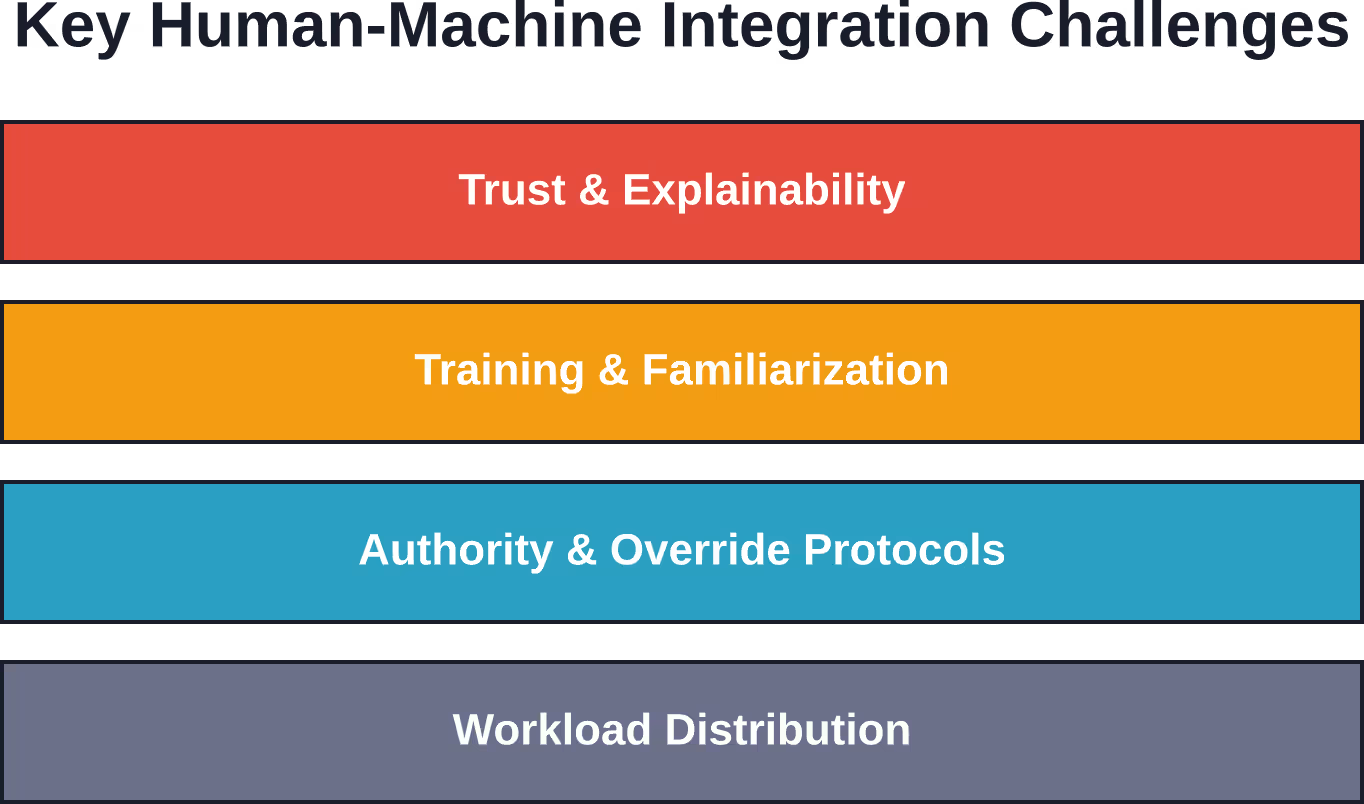
Onderzoekers van RAND onderzoeken de moeilijkheden die het leger zou kunnen ondervinden bij het koppelen van mensen aan algoritmes voor kunstmatige intelligentie om specifieke oorlogstaken uit te voeren. Het creëren van AI-systemen die goed integreren met de soldaten die ermee moeten samenwerken, brengt obstakels met zich mee die verder gaan dan puur technische prestaties.
Eerlijk gezegd: mensen vertrouwen geen systemen die ze niet begrijpen. Wanneer een algoritme een bepaalde handelwijze aanbeveelt, maar niet kan uitleggen waarom, staan commandanten voor onmogelijke keuzes: het systeem negeren en mogelijk cruciale inzichten missen, of de aanbevelingen opvolgen zonder de onderliggende redenering te begrijpen.
Ethische overwegingen en internationale implicaties
RAND onderzocht de ethische overwegingen, voordelen en risico's van militaire toepassingen van kunstmatige intelligentie. Door de ontwikkelingsinspanningen in de Verenigde Staten, China en Rusland te vergelijken, wijst het onderzoek op de noodzaak voor de Verenigde Staten om hun voorsprong op dit gebied te blijven nastreven, terwijl tegelijkertijd met andere landen wordt gezocht naar manieren om het vertrouwen te versterken en de risico's te verminderen.
De recente toepassing van machine learning in autonome wapensystemen brengt ernstige risico's met zich mee voor de geopolitieke stabiliteit en de vrije uitwisseling van ideeën in AI-onderzoek. Dit onderwerp krijgt relatief weinig aandacht in vergelijking met de risico's die voortvloeien uit superintelligente algemene kunstmatige intelligentie, maar de gevolgen op korte termijn zijn wel degelijk van belang.
Open-source AI in defensietoepassingen
Open-source software en standaarden worden alom gebruikt in Amerikaanse nationale veiligheidstoepassingen. Smartphones van het leger, oorlogsschepen van de marine en raketwaarschuwingssatellieten van de Space Force draaien op Linux-gebaseerde besturingssystemen. AI-gestuurde F-16's maken gebruik van open-source orchestratie-frameworks. Dit biedt zowel voordelen op het gebied van capaciteit – snelle innovatie, uitgebreide tests, gedeelde tools – als veiligheidsrisico's met betrekking tot de toegang van tegenstanders tot dezelfde technologieën.
Toekomstige trajecten en beleidsoverwegingen
De toepassing van machine learning in militaire context vertraagt niet, maar versnelt juist. Defensieafdelingen wereldwijd erkennen AI als essentieel voor het behoud van strategisch voordeel.
Maar wacht even. Experts met uiteenlopende standpunten over autonome wapensystemen hebben samengewerkt aan realistische beleidsplannen. De uitdaging ligt in het vinden van een balans tussen innovatie en verantwoorde inzet, waarbij ervoor gezorgd moet worden dat systemen grondig getest worden voordat ze in gebruik worden genomen.
Het Ministerie van de Luchtmacht kan AI- en ML-systemen niet met een gerust hart inzetten voor personeelsbeheer – laat staan voor gevechtsoperaties – zonder analytische kaders om de veiligheid ervan te evalueren en te verbeteren. Deze kaders moeten zowel technische prestaties als menselijke factoren omvatten.
Veelgestelde vragen
Wat zijn de belangrijkste militaire toepassingen van machine learning?
Machine learning vormt de basis voor autonome wapensystemen, inlichtingenanalyse, doelherkenning, cyberverdediging, logistieke optimalisatie, elektronische oorlogsvoering en ondersteuning van commandobeslissingen. Toepassingen strekken zich uit van tactische operaties tot strategische planning in alle militaire domeinen.
Hoe nauwkeurig zijn AI-systemen in het leger?
De nauwkeurigheid is sterk afhankelijk van de context en de toepassing. Aanvaardbare foutpercentages variëren van ongeveer 5% voor de besturing van dodelijke wapens tot 10% voor taken met betrekking tot het samenvatten van inlichtingen. Testen en evalueren blijven cruciale uitdagingen, waarbij 79 leveranciers tools ontwikkelen om de prestaties van militaire AI te beoordelen.
Werken autonome wapens zonder menselijk toezicht?
De huidige militaire doctrine benadrukt menselijk toezicht bij dodelijke beslissingen. Systemen zoals het autonome vliegtuig XQ-58A Valkyrie ondersteunen menselijke piloten in plaats van ze volledig te vervangen. De mate van menselijke controle verschilt echter per systeem en blijft onderwerp van voortdurende beleidsdebatten.
Welke ethische bezwaren spelen er rondom militaire AI?
Belangrijke aandachtspunten zijn onder meer de verantwoording voor door AI gestuurde beslissingen, de potentiële escalatie van de inzet van autonome wapens, de risico's voor de burgerbevolking als gevolg van systeemfouten en de geopolitieke instabiliteit die ontstaat door de concurrentie tussen landen in de ontwikkeling van militaire AI. Internationale consensus over regelgeving blijft moeilijk te bereiken.
Hoe verhoudt militaire AI zich tussen landen?
De Verenigde Staten, China en Rusland lopen voorop in de ontwikkeling van militaire AI, elk met een eigen aanpak. Vergelijkend onderzoek wijst uit dat de VS op bepaalde gebieden een voorsprong behouden, maar te maken hebben met concurrentie die voortdurende investeringen en onderzoek naar risicoverminderende maatregelen in samenwerking met andere landen vereist.
Kunnen AI-modellen strategische militaire beslissingen nemen?
Recent onderzoek toont aan dat geavanceerde AI-modellen in staat zijn tot complexe strategische redeneringen tijdens gesimuleerde crises, waarbij ze analyses van honderdduizenden woorden produceren. De prestaties variëren echter aanzienlijk per model en operationele omstandigheden.
Welke rol speelt open-source software in militaire AI?
Open-source componenten zijn wijdverspreid in militaire codebases, waaronder besturingssystemen voor smartphones van het leger, oorlogsschepen van de marine en satellieten van de ruimtevaartmacht. Dit maakt snelle innovatie en uitgebreide tests mogelijk, maar roept tegelijkertijd veiligheidsrisico's op met betrekking tot de toegang van tegenstanders tot vergelijkbare technologieën.
Conclusie
Machine learning heeft de militaire capaciteiten fundamenteel veranderd, waardoor systemen informatie kunnen verwerken, patronen herkennen en beslissingen ondersteunen met een snelheid die voor menselijke analisten alleen onmogelijk is. Van autonome platforms tot inlichtingenoperaties, ML-toepassingen bestrijken elk aspect van de moderne defensie.
Technologie brengt zowel kansen als risico's met zich mee. Hoewel ML-systemen ongekende operationele voordelen bieden, brengen ze ook uitdagingen met zich mee op het gebied van nauwkeurigheid, verklaarbaarheid, ethische inzet en geopolitieke stabiliteit. Militaire planners moeten deze uitdagingen aanpakken door middel van rigoureuze tests, doordacht beleid en voortdurend onderzoek naar de integratie van mens en machine.
Nu defensieorganisaties wereldwijd de adoptie van AI versnellen, is de cruciale vraag niet of machine learning in militaire toepassingen moet worden ingezet, maar hoe dit op een verantwoorde manier kan gebeuren, met behoud van menselijk toezicht en tegelijkertijd gebruikmakend van algoritmische mogelijkheden om de nationale veiligheidsbelangen te beschermen.