
Quick Summary: Klaviyo’s predictive analytics features use machine learning to forecast customer behavior, including CLV predictions, churn risk scores, expected next order dates, channel affinity, and next best product recommendations. These tools analyze historical purchase patterns and engagement data to help brands segment audiences, personalize campaigns, and reduce churn—delivering measurable improvements in retention and revenue. Predictive analytics transforms raw customer data into actionable forecasts. Instead of guessing which customers might churn or what products they’ll buy next, brands can leverage machine learning models that analyze historical behavior patterns and surface precise predictions. Klaviyo builds predictive analytics directly into its platform, applying data science techniques to every account’s unique customer population. These predictions appear on individual customer profiles and power advanced segmentation, enabling marketers to target the right people with the right messages at exactly the right moment. Here’s what makes Klaviyo’s approach different: the platform doesn’t share training data between accounts. Each business gets a custom churn model tailored to its unique buying cycles, product catalog, and customer behavior patterns. Generic academic models tend to be overly optimistic, assigning medium 40-70% churn probabilities to customers who, in Klaviyo’s data, actually churn at rates of 88-97%. Klaviyo’s account-specific models deliver far more accurate predictions.
Core Predictive Analytics Features
Klaviyo’s predictive analytics suite includes five primary features, each designed to answer a specific strategic question about customer behavior.
Customer Lifetime Value Predictions
CLV predictions break down into three distinct metrics visible on every customer profile:
| Metric | Definition | Example Value |
|---|---|---|
| Historic CLV | Total value of all previous orders, accounting for refunds and returns | $401 |
| Predicted CLV | A prediction of how much money a particular customer will spend in the next year | $99 |
| Total CLV | Sum of historic and predicted values | $500 |
The predicted CLV figure uses purchase frequency, average order value, and time between orders to estimate future spending. Brands can segment customers by predicted CLV to identify high-value prospects worth investing in with personalized retention campaigns.
Churn Risk Prediction
Churn risk scores range from 0 to 1, representing the probability a customer won’t purchase again. A score of 0.21 means there’s a 21% chance of churn, while 0.90 indicates a 90% likelihood. The model considers order frequency and recency. As customers place more orders, their churn risk drops. As time passes without a purchase beyond their typical buying cycle, the risk climbs. If you’re seeing churn prediction values around 50%, you’re in excellent shape with your customer base. But if you’re seeing churn prediction values above 75%, you have some decisions to make about retention strategies and prioritizing the customers who are more likely to come back. 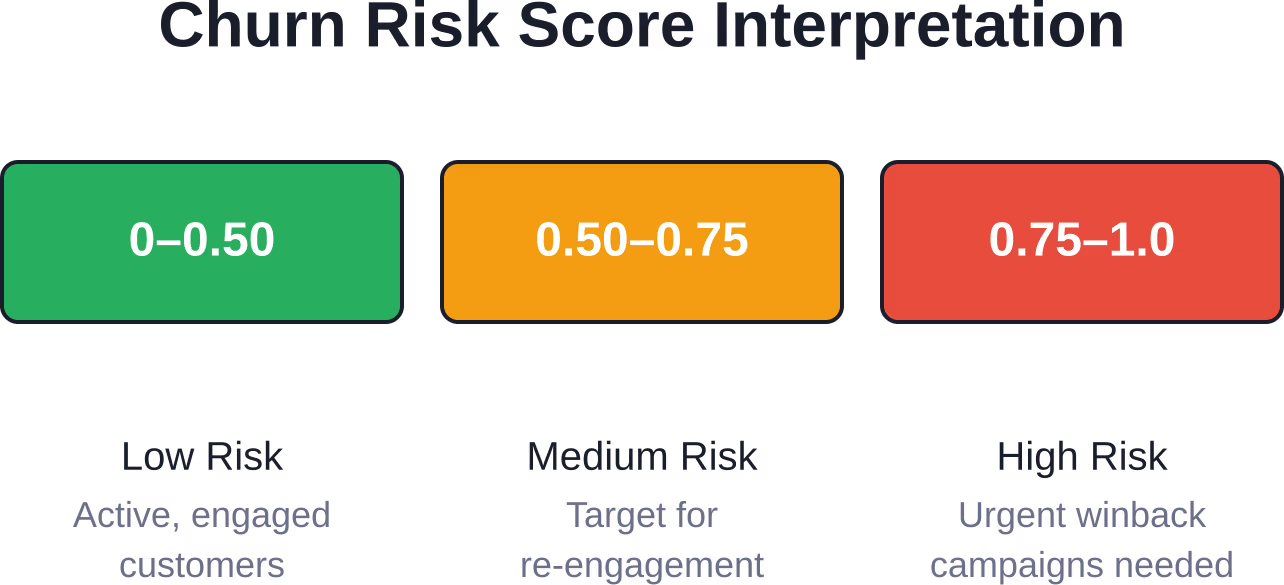
Expected Date of Next Order
This metric calculates the average time between a customer’s orders and projects forward. If someone typically reorders every 75 days, the expected next order date sits 75 days after their most recent purchase. Brands selling consumable products—supplements, coffee, skincare—find this particularly valuable. When the expected reorder date passes without a purchase, automated flows can trigger reminder emails or discount incentives.
Channel Affinity
Channel affinity predicts which communication channel each customer is most likely to engage with: email or SMS. The model analyzes historical open rates, click rates, and conversion patterns across both channels. This prevents message fatigue. Instead of blasting every customer on every channel, marketers can route messages through each person’s preferred medium. Someone with high SMS affinity gets texts for time-sensitive offers, while email-preferring customers receive detailed newsletters.
Next Best Product
Next best product recommendations analyze purchase patterns across your entire customer base to identify which products are frequently bought together or commonly purchased in sequence. The algorithm looks at two key signals: products bought in the same order and products bought in the next order. It automatically excludes unavailable items and ignores the first 48 hours of repeat purchase data to avoid skewing recommendations with immediate reorders. These predictions update dynamically as customers place new orders. The next best product shown on a profile changes based on what they’ve purchased most recently. 
Use Predictive Analytics with AI Superior
AI Superior helps build predictive models that can be connected to marketing tools and customer data platforms. The focus is on creating models outside the platform and integrating outputs into existing workflows where they can be used for targeting and automation.
Looking to Use Predictive Analytics with Klaviyo?
AI Superior can help with:
- working with customer and marketing data
- building predictive models
- integrating outputs into existing workflows
- refining results based on usage
👉 Contact AI Superior to discuss your project, data, and implementation approach
How Klaviyo Computes Predictions
Klaviyo applies machine learning models to the complete event history stored in each account. Every order, every email open, every product view feeds the algorithms. The platform doesn’t require manual setup for basic predictions. Once sufficient historical data accumulates—tat least 500 placed orders—the models begin generating forecasts automatically. That said, there’s one important configuration option: metric mapping. If your business uses custom events or tracks revenue through non-standard metrics, navigate to your account settings to adjust which events Klaviyo uses for CLV and churn calculations. This ensures predictions align with your actual business logic.
Using Predictive Analytics for Segmentation
Raw predictions become powerful when combined with Klaviyo’s segmentation engine. Every predictive metric is available as a segment condition. 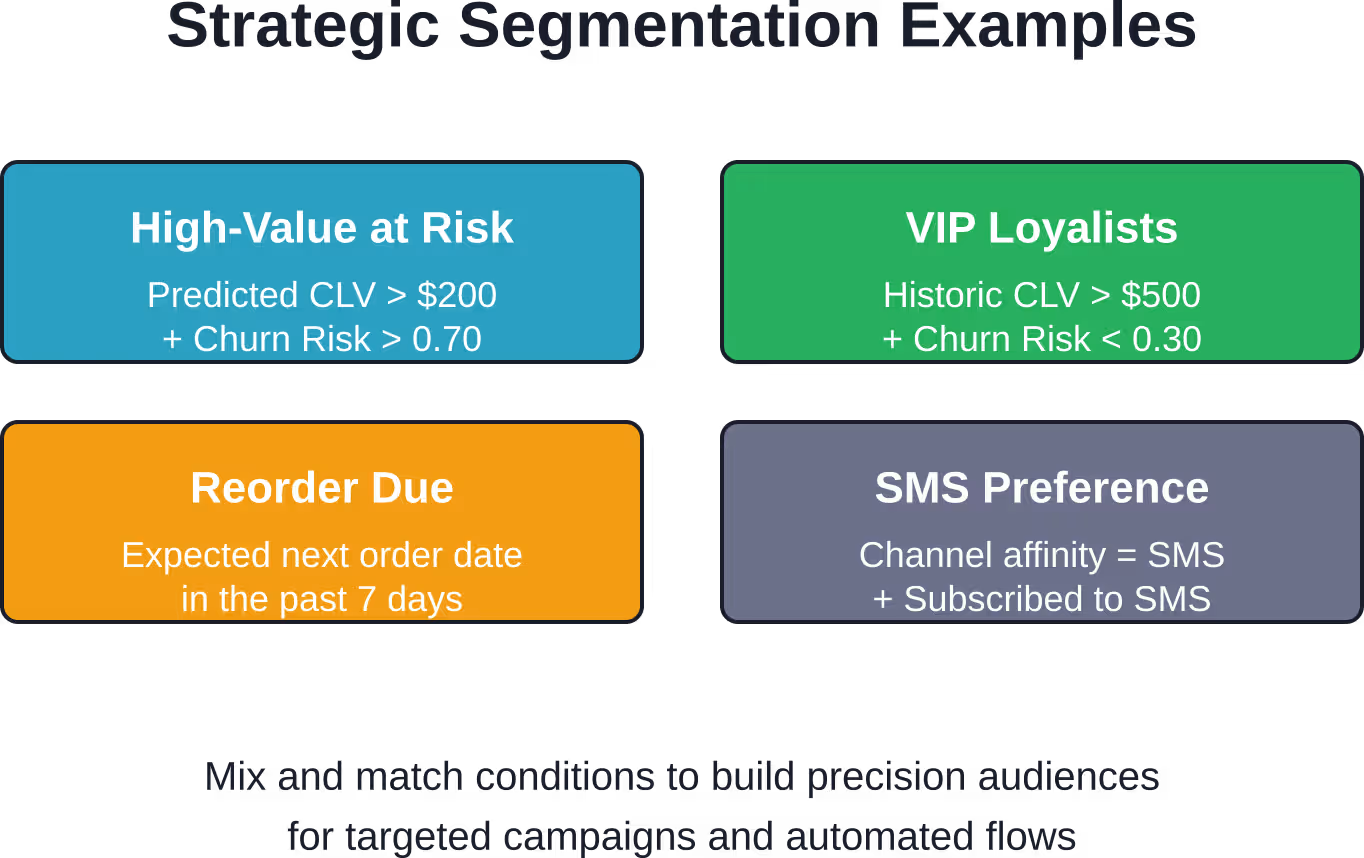 A segment targeting high-value customers at risk of churning might combine predicted CLV greater than $200 with churn risk above 0.70. That audience receives premium retention offers—early access to new products, exclusive discounts, or personalized outreach from customer success teams. Another common approach: segment customers whose expected next order date has passed by seven days. Route them into a reorder reminder flow that references their last purchase and suggests complementary products based on next best product predictions. Segments can include up to 100 conditions, allowing sophisticated multi-layered targeting. Combine predictive metrics with behavioral data—recent browsing activity, past campaign engagement, geographic location—to create hyper-targeted audiences.
Real-World Impact and Performance
Predictive analytics isn’t theoretical. Brands using these features see measurable improvements in key metrics. When predictive and prescriptive analytics work together—forecasting behavior, then recommending optimal actions—brands report potential improvements in email performance and conversion rates. Email marketing already delivers an impressive $36-$42 return for every $1 invested. Layering in predictive segmentation amplifies that return significantly. Consider product recommendations. Generic “you might also like” suggestions perform adequately. But next best product predictions trained on actual purchase sequences convert at substantially higher rates because they reflect real buying patterns, not generic collaborative filtering. Churn mitigation shows similar gains. Proactive winback campaigns triggered by rising churn scores recover customers before they’ve mentally moved on. Waiting until someone’s fully disengaged makes reactivation far more difficult and expensive.
Integration with Marketing Analytics
Klaviyo offers Marketing Analytics as a separate add-on product that extends predictive capabilities even further. This includes deeper product analysis reports and automatically updated next best product properties that exclude unavailable items and recent purchases. The product analysis report determines optimal recommendations based on purchase sequences across the entire customer base. As profiles place new orders, these properties update dynamically, ensuring recommendations stay current. Marketing Analytics requires both an email plan and the analytics add-on. Pricing varies based on account size and needs.
Frequently Asked Questions
How much historical data does Klaviyo need to generate predictions?
Klaviyo typically requires a few hundred orders across your customer base before predictive models begin producing reliable forecasts. Accounts with very limited transaction history may see predictions appear but with lower confidence scores. As more data accumulates, accuracy improves.
Can I exclude certain products from next best product recommendations?
Klaviyo automatically excludes unavailable items from next best product suggestions. For manual exclusions—such as removing one-time promotional items or discontinued SKUs—custom catalog management and segmentation logic can filter out specific products, though this requires configuration within your product feed and segment conditions.
Do churn predictions work for subscription businesses?
Absolutely. Churn predictions analyze order frequency and timing, making them particularly valuable for subscription models where consistent reorder cycles define healthy engagement. Rising churn scores signal subscribers at risk of cancellation, enabling proactive retention campaigns.
How often do predictive analytics values update?
Predictive values refresh regularly as new data flows into Klaviyo. When a customer places an order, their CLV, churn risk, and next order date update to reflect the new purchase. Channel affinity adjusts based on ongoing engagement patterns across email and SMS.
Can I use predictive analytics in automated flows?
Yes. Segment conditions based on predictive metrics can trigger flow entries. For example, create a flow that triggers when churn risk exceeds 0.75, sending a personalized winback series. Or trigger a VIP flow when predicted CLV crosses a high threshold, offering exclusive perks.
Does Klaviyo share my customer data with other accounts for training?
No. Klaviyo builds separate predictive models for each account using only that account’s data. Customer population data never transfers between businesses. This ensures predictions reflect your unique buying cycles and customer behavior, not generic industry averages.
What’s the difference between predicted CLV and total CLV?
Historic CLV represents all past spending, accounting for refunds and returns. Predicted CLV is a prediction of how much money a particular customer will spend in the next year. Total CLV is simply the sum of these two values, representing lifetime value to date plus expected future value.
Taking Action with Predictive Insights
Predictive analytics features transform Klaviyo from a messaging platform into a strategic intelligence engine. Instead of reactive campaigns sent to broad audiences, brands can proactively target specific customer segments with precisely timed, personalized messages. Start small. Build one segment using churn risk or predicted CLV. Launch a targeted campaign to that audience. Measure the lift compared to unsegmented sends. Then expand—add channel affinity routing, incorporate next best product recommendations, layer in behavioral triggers. The predictive data already exists in your account. The models are already running. The only step remaining is putting those insights to work.