
Quick Summary: Predictive analytics in hospitality uses AI and machine learning to forecast demand, optimize pricing, personalize guest experiences, and improve operational efficiency. Hotels leveraging these tools report revenue increases of 10-25% and forecasting accuracy improvements of 20%, transforming data into actionable insights that drive profitability and guest satisfaction. The hospitality landscape has shifted dramatically. Gone are the days when hotel managers relied on gut instinct and spreadsheets to set room rates or plan staffing levels. Data-driven decision-making isn’t just a competitive advantage anymore—it’s table stakes. Predictive analytics represents the next evolution in hospitality management. By analyzing historical patterns, market conditions, and guest behaviors, hotels can anticipate demand fluctuations, optimize pricing strategies, and deliver personalized experiences that drive loyalty and revenue. The results speak for themselves. Hotels implementing predictive analytics report 10-25% increases in revenue per available room, while forecasting accuracy improves by 20% when AI-powered tools are fully deployed. A major international hotel group increased revenue by 10% in just one year through predictive analytics implementation.
Understanding Predictive Analytics in Hospitality
Predictive analytics applies statistical algorithms and machine learning techniques to historical and real-time data, identifying patterns that forecast future outcomes. In hospitality, this means transforming raw data—booking trends, guest preferences, market conditions, competitor pricing—into actionable intelligence. The technology analyzes multiple data streams simultaneously. Reservation systems, property management platforms, customer relationship management tools, online reviews, social media sentiment, local event calendars, and weather forecasts all feed into predictive models. These systems learn continuously, refining their accuracy as new data arrives. Here’s the thing though—predictive analytics doesn’t replace human judgment. It augments decision-making by providing revenue managers and operations teams with probability-based insights they can act on strategically.
How the Technology Works
Machine learning algorithms process vast datasets to identify correlations humans might miss. A sudden spike in flight bookings to a destination six months out might signal elevated demand. Historical patterns showing occupancy increases during specific local events help hotels prepare inventory and staffing strategies. The predictive models incorporate multiple variables: seasonality, booking windows, customer segments, price elasticity, competitor activity, and external factors like economic indicators or weather patterns. As these models encounter new scenarios, they adjust their predictions based on actual outcomes. 
Apply Predictive Analytics with AI Superior
AI Superior builds predictive models using booking, customer, and operational data to support forecasting and planning. The focus is on integrating models into existing systems so predictions can support daily operations.
Looking to Use Predictive Analytics in Hospitality?
AI Superior can help with:
- evaluating booking and customer data
- building predictive models
- integrating models into existing systems
- refining outputs based on results
👉 Contact AI Superior to discuss your project, data, and implementation approach.
Demand Forecasting: The Foundation of Revenue Management
Accurate demand forecasting sits at the heart of successful revenue management. Hotels need visibility into future booking patterns to optimize pricing, allocate inventory, and plan operations efficiently. Traditional forecasting methods relied on historical averages and manual adjustments. Predictive analytics transforms this process by incorporating dozens of variables simultaneously, identifying subtle patterns that indicate demand shifts months in advance. Real-world data demonstrates the power of advanced forecasting. In Dubai during the buildup to Valentine’s Day 2022, predictive models identified elevated demand 287 days before travel dates—well before any booking pickup occurred in the market. This early signal gave revenue managers nearly a year to position inventory and pricing strategies. The final market occupancy reached 97%. In a Sydney scenario, demand analytics provided 136 days advance notice, allowing hotels to implement revenue strategies that achieved 61% final market occupancy despite challenging conditions.
Building Accurate Forecasts
Cornell University’s hospitality programs emphasize systematic approaches to forecasting that incorporate booking curves, pickup analysis, and demand segmentation. The methodology accounts for forecast error and its operational impact—a critical consideration since perfect predictions are impossible. Predictive systems track booking pace across multiple segments: transient guests, groups, corporate contracts, and wholesale channels. Each segment exhibits different booking behaviors and price sensitivity. By forecasting segment-level demand, revenue managers can make nuanced inventory and pricing decisions. The models also monitor market-wide indicators: competitor occupancy levels, airline seat capacity, major events, and economic trends. This market context prevents hotels from making decisions in a vacuum.
Dynamic Pricing Optimization
Dynamic pricing represents one of the most impactful applications of predictive analytics. Rather than setting static rates or making periodic manual adjustments, hotels can continuously optimize pricing based on predicted demand, competitor activity, and revenue objectives. Airlines have pioneered sophisticated dynamic pricing using algorithms to adjust fares based on booking patterns and competitive positioning. Hotels implementing dynamic pricing via predictive analytics report 10-25% increases in revenue per available room. The systems adjust rates multiple times daily, responding to market conditions in real time while maintaining rate integrity across distribution channels. The algorithms balance competing objectives: maximizing revenue, maintaining market share, protecting brand positioning, and avoiding rate parity violations. They also consider booking window dynamics—rates for bookings 90 days out follow different optimization rules than next-week arrivals.
| Pricing Strategy | Forecast Horizon | Adjustment Frequency | Typical Impact |
|---|---|---|---|
| Traditional | 30-60 days | Weekly | Baseline |
| Rule-Based Dynamic | 90-120 days | Daily | +5-10% RevPAR |
| AI-Powered Predictive | 365 days | Multiple times daily | +10-25% RevPAR |
| Advanced Machine Learning | 365+ days | Continuous | +15-30% RevPAR |
Personalization at Scale
Modern travelers expect personalized experiences. Many travelers prefer personalized accommodation options. Predictive analytics makes mass personalization operationally feasible by anticipating guest preferences and automating tailored interactions. Guest data from previous stays, booking channels, demographic information, and behavioral signals feed predictive models that forecast individual preferences. A business traveler booking through corporate channels likely values efficient check-in, workspace amenities, and proximity to meeting facilities. A leisure guest booking a weekend package might appreciate restaurant recommendations and spa offerings. Hilton employs sentiment analytics on guest feedback to rapidly flag operational issues, prioritizing upgrades that boost loyalty scores and repeat stays. The predictive approach identifies which service improvements will generate the highest return in guest satisfaction and lifetime value. Personalization extends beyond the stay itself. Predictive models optimize marketing communications, determining which guests should receive promotional offers, what types of packages to present, and when to send messages for maximum conversion probability.
Anticipating Needs Before Arrival
Advanced predictive systems analyze booking characteristics to anticipate guest needs before arrival. A guest booking far in advance with specific room requests might be planning a special occasion. Early outreach offering celebratory amenities can enhance the experience and generate ancillary revenue. Pre-arrival predictions also inform operational preparation. Guests with histories of extended stays and workspace requests signal demand for business center services. Families with young children indicate needs for cribs, connecting rooms, and kid-friendly amenities. 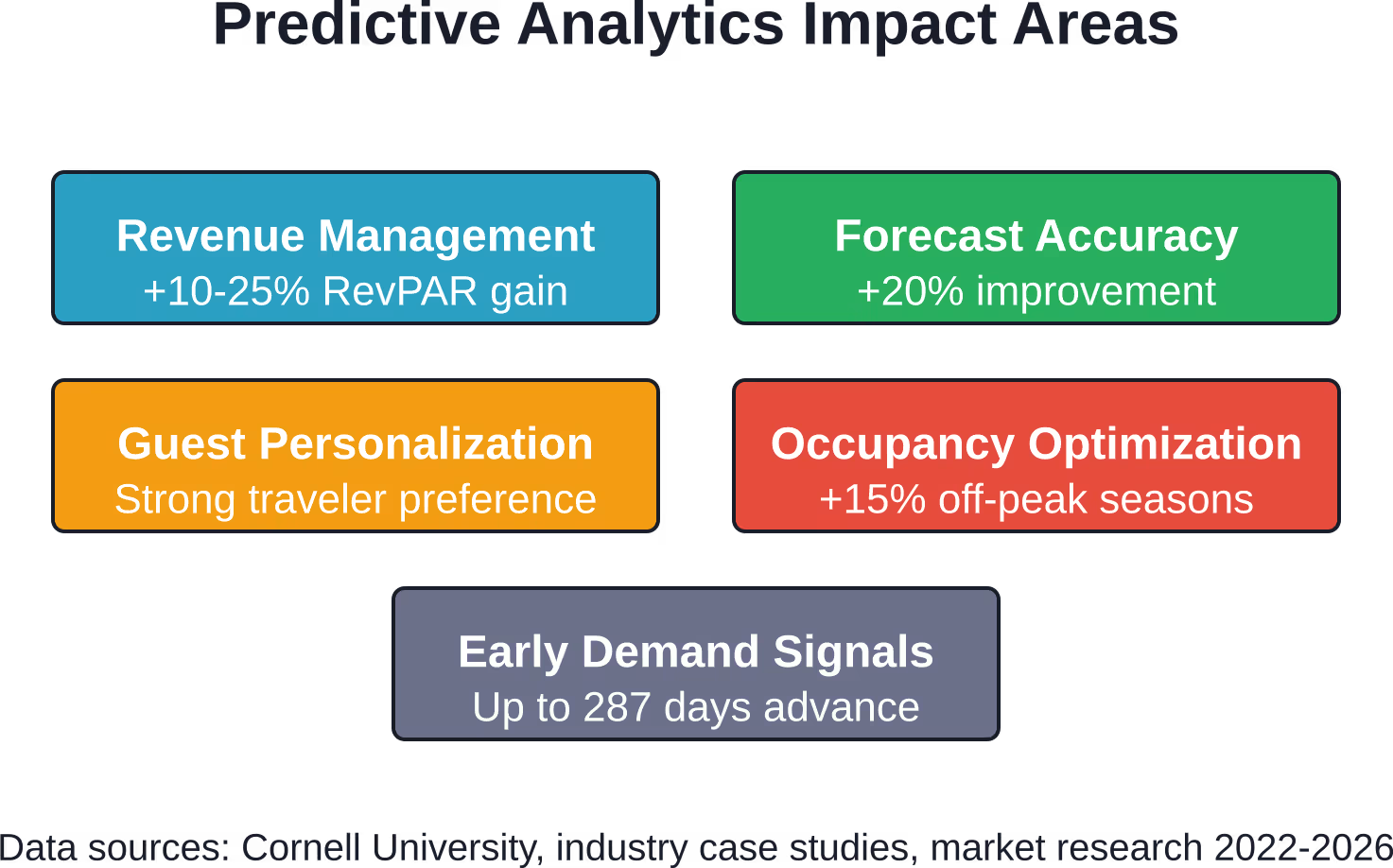
Operational Efficiency and Staffing Optimization
Predictive analytics extends beyond revenue management into core operations. Accurate demand forecasting enables smarter staffing decisions, reducing labor costs while maintaining service quality. Overstaffing during low-demand periods wastes resources. Understaffing during peaks degrades guest experience and strains employees. Predictive models forecast occupancy, guest counts, and service demand across departments—front desk, housekeeping, food and beverage, maintenance—allowing managers to schedule staff precisely. The systems also predict ancillary service demand. High leisure occupancy weekends might require additional restaurant and spa staff. Corporate group arrivals signal demand for meeting room support and business center services. Beyond staffing, predictive analytics optimizes purchasing and inventory management. Forecasted occupancy and guest mix inform food and beverage ordering, housekeeping supply procurement, and amenity stocking. This reduces waste, prevents stockouts, and improves working capital efficiency.
Challenges and Implementation Considerations
Despite proven benefits, predictive analytics adoption faces obstacles. Data quality issues top the list. Predictive models require clean, consistent, comprehensive data. Many hotels operate fragmented systems where reservation data, guest profiles, financial records, and operational metrics live in disconnected platforms. Integration challenges compound data issues. Legacy property management systems often lack modern APIs or export capabilities. Connecting these systems to analytics platforms requires technical expertise and sometimes costly middleware solutions. Privacy concerns represent another significant challenge. Analytics effectiveness depends on collecting and analyzing guest data, but regulations like GDPR impose strict limitations. More than 85% of adults globally want additional measures to safeguard their online privacy. Hotels must balance analytical capabilities with privacy obligations and guest trust.
Building Analytics Capabilities
Successful implementation requires more than technology. Staff need training to interpret predictive insights and incorporate them into decision-making. Revenue managers accustomed to intuition-based pricing must learn to trust algorithmic recommendations while maintaining strategic oversight. Cornell University offers specialized training in forecasting and availability controls through eCornell, with courses requiring 3-5 hours of study per week. These programs provide systematic approaches to building booking curves, accounting for pickup patterns, segmenting demand, and calculating forecast error. Organizational culture matters too. Hotels treating technology as a cost center rather than growth engine underinvest in analytics capabilities. Executive buy-in and cross-functional collaboration between revenue management, operations, IT, and marketing teams are essential.
| Challenge | Impact | Solution Approach |
|---|---|---|
| Data Quality Issues | Inaccurate predictions | Implement data governance, cleansing processes |
| System Integration | Limited functionality | API-first platforms, middleware solutions |
| Privacy Compliance | Legal/trust risks | Anonymization, consent management, transparency |
| Skills Gaps | Underutilization | Training programs, phased rollout, expert support |
| Change Resistance | Low adoption | Executive sponsorship, quick wins, cultural shift |
The Growing Role of AI and Generative Technologies
Artificial intelligence adoption in hospitality is accelerating rapidly. The share of executives seeing AI’s potential to fundamentally reshape business strategy increased from 39% in 2023. A significant 80% of organizations have increased their investment in generative AI, with nearly a quarter integrating it into some operations. Generative AI introduces new capabilities beyond traditional predictive analytics. Chatbots powered by large language models handle guest inquiries, process requests, and provide personalized recommendations at scale. These systems learn from interactions, continuously improving response quality. AI also enhances workforce management. Predictive models forecast not just staffing needs but optimal skill mixes. Generative systems can draft shift schedules, suggest training priorities, and even predict employee turnover risk—allowing proactive retention efforts. Maintenance and asset management benefit from predictive technologies too. IoT sensors monitoring HVAC systems, elevators, and building equipment feed data into predictive maintenance models. These systems forecast equipment failures before they occur, scheduling preventive maintenance during low-occupancy periods to minimize guest impact.
Future Trends and Innovations
Predictive analytics capabilities continue evolving. Real-time data processing enables increasingly dynamic decision-making. Hotels can now adjust pricing, promotions, and inventory allocation minute-by-minute based on booking velocity, competitor actions, and market conditions. Cross-property and portfolio-level analytics represent another frontier. Hotel groups with multiple properties can leverage aggregated data for more accurate predictions. A booking surge at one property might signal broader market trends affecting the entire portfolio. The integration of alternative data sources expands predictive power. Social media sentiment, web search trends, airline booking data, local event calendars, and economic indicators all provide signals about future demand. Advanced models synthesize these diverse inputs into unified forecasts. Hyper-personalization will become more sophisticated. Rather than segment-level predictions, future systems will forecast individual guest preferences and behaviors with high accuracy. This enables truly individualized pricing, marketing, and service delivery.
Frequently Asked Questions
What is predictive analytics in the hospitality industry?
Predictive analytics in hospitality applies machine learning algorithms and statistical models to historical and real-time data to forecast future outcomes. This includes demand forecasting, pricing optimization, guest behavior prediction, and operational planning. The technology helps hotels make data-driven decisions about revenue management, staffing, inventory, and guest experiences.
How much can hotels increase revenue with predictive analytics?
Hotels implementing predictive analytics for dynamic pricing report revenue per available room increases of 10-25%. A major international hotel group achieved a 10% revenue increase in one year, while boutique chains improved off-peak occupancy rates by 15% using big data analytics. Forecasting accuracy improvements of 20% enable better inventory and pricing decisions that directly impact profitability.
What data sources do predictive analytics systems use?
Predictive systems integrate multiple data streams: property management systems, reservation platforms, customer relationship management tools, online reviews, social media sentiment, competitor pricing, market occupancy data, local event calendars, weather forecasts, economic indicators, and airline booking trends. The models analyze these diverse inputs to identify patterns and generate forecasts.
How far in advance can predictive analytics forecast hotel demand?
Advanced predictive systems monitor demand indicators up to 365 days in advance. Real-world examples show demand signals appearing 287 days before travel dates in some markets, giving hotels nearly a year to optimize positioning and pricing strategies. The accuracy increases as the arrival date approaches and more booking data becomes available.
What are the main challenges in implementing predictive analytics?
Key challenges include data quality issues (inconsistent or incomplete datasets), system integration difficulties with legacy platforms, privacy compliance requirements, staff training needs, and organizational change management. Around 85% of adults globally want stronger online privacy protections, requiring careful data governance. Successful implementation requires executive sponsorship, cross-functional collaboration, and phased rollout strategies.
How does predictive analytics improve guest personalization?
Predictive models analyze booking patterns, previous stay history, demographic data, and behavioral signals to forecast individual guest preferences. This enables automated personalization of room assignments, amenity offerings, marketing communications, and service delivery. Hotels like Hilton use sentiment analytics on feedback to prioritize improvements that boost loyalty scores and repeat bookings, with many travelers preferring personalized accommodation options.
What role does AI play in hospitality predictive analytics?
AI enhances traditional predictive analytics through advanced pattern recognition, real-time processing, and continuous learning. Generative AI powers chatbots for guest interactions, creates optimized staff schedules, and generates personalized marketing content. AI adoption in hospitality operations is growing significantly, with a substantial majority of executives viewing AI as fundamentally transformative to business strategy.
Conclusion: Data-Driven Hospitality Is the Future
Predictive analytics has moved from experimental technology to operational necessity in hospitality. The competitive advantages are too significant to ignore—double-digit revenue increases, vastly improved forecasting accuracy, enhanced guest satisfaction, and optimized operations. Hotels still relying on intuition and historical averages leave money on the table. They miss demand signals competitors detect months in advance. They set prices reactively rather than strategically. They staff based on guesswork rather than data-driven predictions. The technology continues advancing rapidly. AI capabilities expand, data sources multiply, and analytical sophistication grows. Early adopters are already capturing benefits while building organizational expertise and competitive moats. But technology alone doesn’t guarantee success. Implementation requires clean data infrastructure, integrated systems, trained staff, and supportive culture. Hotels must view analytics as strategic investment rather than IT expense. Ready to transform your hospitality operations through predictive analytics? Start by assessing your current data capabilities, identifying quick-win use cases, and building cross-functional support for analytics initiatives. The hotels thriving in 2026 and beyond will be those that master the science of turning data into strategic advantage.