The challenge
An insurance company wanted to offer usage-based insurance to its customers. Insurers have long wanted to reward good drivers with cheaper rates, but assessing driving behaviour accurately and granting fair discounts based on individual performance has been difficult.
Traditional methods rely on limited data and subjective assessment, which leads to inconsistent results. The goal was a system that could process and analyse telematic data to evaluate driving behaviour accurately and calculate personalised discounts.
Our solution
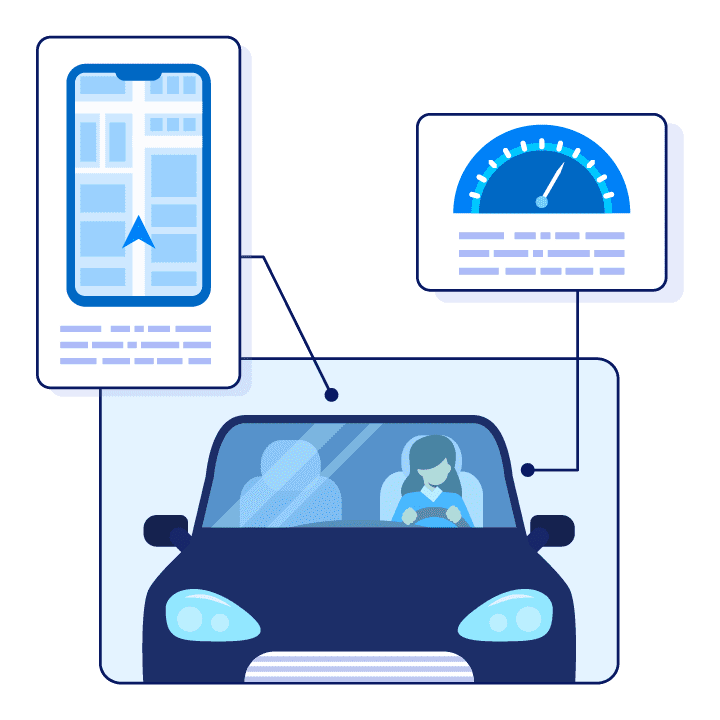
We used deep learning algorithms to build a model that analyses telematic data collected from the driver’s phone, including accelerometer, gyroscope, GPS and other sensor data. The system detects the driving mode, for example whether the user is driving or is a passenger, and tracks behaviours such as exceeding the speed limit, unnecessary acceleration and abrupt hard braking.
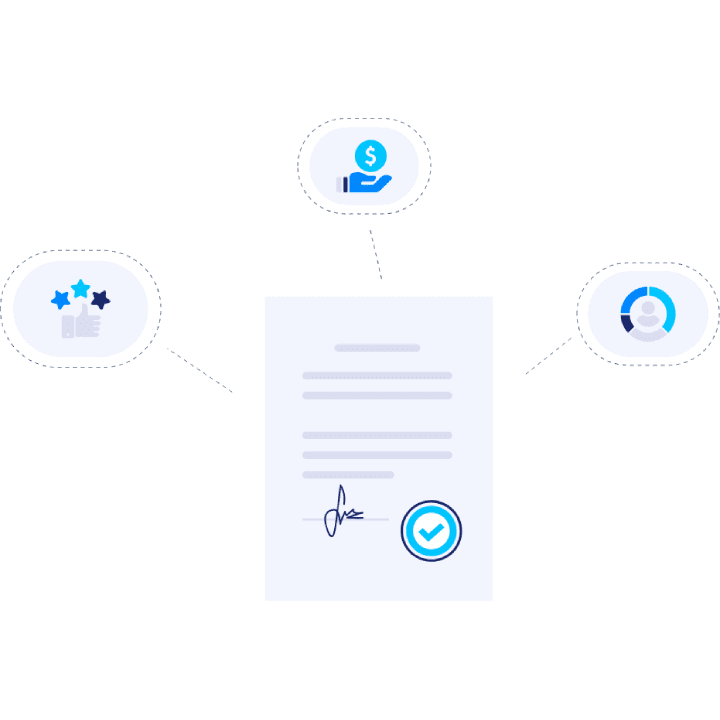
A scoring algorithm then gives each trip an overall score, and a personal discount is calculated for each driver from these scores. The system also gives drivers recommendations that encourage safe driving.
- Analysis of accelerometer, gyroscope, GPS and other smartphone sensor data
- Detection of driving mode: driver or passenger
- Detection of speeding, unnecessary acceleration and abrupt hard braking
- Trip scoring and personal discount calculation for each driver
- Safe-driving recommendations for drivers
The outcome
The insurer can evaluate drivers on their actual performance and reward those with good driving skills. Personalised discounts give drivers an incentive to drive more safely, which supports road safety and can reduce the number of accidents and insurance claims.
The project builds on our earlier insurance work, including risk estimation and management.