
Kurzzusammenfassung: Maschinelles Lernen in Videospielen umfasst Techniken wie Reinforcement Learning für das Verhalten von NPCs, prozedurale Inhaltsgenerierung und auf Deep Learning basierende Spielagenten. Bahnbrechende Forschungsanwendungen wie AlphaGo und AlphaStar demonstrieren zwar das Potenzial von ML, doch die meisten produzierten Spiele setzen aufgrund der Komplexität der Fehlersuche, Bedenken hinsichtlich der Unvorhersagbarkeit und Leistungsbeschränkungen weiterhin auf traditionelle KI. Die Verbreitung nimmt jedoch rasant zu – 501 % der Spieleentwicklungsunternehmen nutzen generative KI bereits für die Inhaltserstellung, das Testen und Designprozesse.
Maschinelles Lernen hat unsere Sicht auf künstliche Intelligenz in Spielen grundlegend verändert. Von Nicht-Spieler-Charakteren, die sich an den Spielstil anpassen, bis hin zu ganzen Spielwelten, die algorithmisch generiert werden – ML-Techniken verändern sowohl die Entwicklung als auch das Spielerlebnis.
Doch die Realität sieht anders aus: Während die akademische Forschung spektakuläre Beispiele für maschinelles Lernen bei der Entwicklung komplexer Spiele hervorgebracht hat, bietet die alltägliche Praxis in der Spieleentwicklung ein anderes Bild. Die meisten kommerziellen Titel nutzen maschinelles Lernen trotz jahrzehntelanger Forschung auf diesem Gebiet immer noch nicht für die grundlegende KI des Gameplays.
Diese Diskrepanz zwischen Forschungspotenzial und Produktionsrealität liefert faszinierende Erkenntnisse über die Möglichkeiten und praktischen Grenzen des maschinellen Lernens. Der globale Markt für KI in der Spieleindustrie erreichte 2024 ein Volumen von 3,28 Milliarden US-Dollar (1 Tsd. 4 Billionen US-Dollar), und Analysten prognostizieren ein Wachstum auf 51 Milliarden US-Dollar (1 Tsd. 4 Billionen US-Dollar) bis 2033. Dies verdeutlicht die rasante Entwicklung der Beziehung der Branche zum maschinellen Lernen.
Wie maschinelles Lernen in Spielkontexten funktioniert
Maschinelles Lernen ist ein Teilgebiet der künstlichen Intelligenz, das aus historischen Daten Vorhersage- und Analysemodelle erstellt. Anstatt jedes Verhalten manuell zu programmieren, lernen ML-Systeme Muster und entwickeln Strategien durch Erfahrung.
Drei Hauptklassen dominieren die Anwendungen des maschinellen Lernens: überwachtes Lernen (Training mit gelabelten Daten), unüberwachtes Lernen (Erkennen von Mustern in ungelabelten Daten) und bestärkendes Lernen (Lernen durch Versuch und Irrtum mit Belohnungen).
Gerade im Gaming-Bereich hat sich Reinforcement Learning als besonders relevant erwiesen. Ein Agent spielt wiederholt und erhält positive Belohnungen für vorteilhafte Aktionen (Gewinnen, Punkte sammeln) und negative Belohnungen für schädliche (Verlust von Gesundheit, Tod). Über Tausende oder Millionen von Iterationen entwickelt der Agent immer ausgefeiltere Strategien.
Das ML-Agents-Toolkit von Unity ist ein Beispiel für die praktische Anwendung. Das ML-Agents-Paket unterstützt moderne Reinforcement-Learning-Algorithmen und ermöglicht es, Spiele und Simulationen als Trainingsumgebungen für intelligente Agenten zu nutzen. Das Training kann Reinforcement Learning, Imitationslernen, Neuroevolution oder hybride Ansätze verwenden.
Geschulte Agenten unterstützen mehrere Anwendungsfälle: die Steuerung des Verhaltens von NPCs in Einzelagenten- oder Mehragentenszenarien, automatisierte Tests von Spielversionen und die Bewertung von Designentscheidungen vor der Veröffentlichung.
Meilensteine im Bereich maschinelles Lernen
Mehrere hochkarätige Projekte haben gezeigt, was möglich ist, wenn massive Rechenressourcen auf modernste Algorithmen treffen.
AlphaGo und die Meisterschaft im Brettspiel
Google DeepMinds AlphaGo aus dem Jahr 2015 war die erste KI, die einen professionellen Go-Spieler besiegte – ein Meilenstein, den Experten erst für ein Jahrzehnt erwartet hatten. Die Herausforderung lag in der Komplexität von Go: etwa 10^170 mögliche Spielsituationen im Vergleich zu den 10^120 beim Schach.
Vor der Entwicklung von Deep-Learning-Modellen konnten Go-Spieler nur auf dem Niveau von Amateurspielern spielen. AlphaGo kombinierte neuronale Netze mit der Baumsuche und trainierte sowohl mit Spieldaten menschlicher Spieler als auch durch Selbstspiel. Seine Nachfolger AlphaZero und MuZero brachten sich Schach, Shogi und Go von Grund auf selbst bei und meisterten alle drei Spiele durch reines Selbstspiel-Reinforcement-Learning.
AlphaStar und Echtzeitstrategie
StarCraft II stellte eine völlig andere Herausforderung dar – Echtzeit-Entscheidungsfindung, unvollständige Informationen, langfristige Planung und die gleichzeitige Mikromanagement mehrerer Einheiten. 2019 erreichte DeepMinds AlphaStar den Großmeister-Rang, wobei der letzte hochrangige Agent eine Wertung von über 99,8% der aktiven Spieler auf Battle.net erzielte.
Das System nutzte gängige Verfahren wie neuronale Netze, selbstgesteuertes Reinforcement Learning, Multiagenten-Lernen und Imitationslernen. Das anfängliche Training allein durch Imitationslernen schlug 841.300 aktive Spieler. Der finale Agent trainierte 801.300 Spiele gegen sich selbst und 201.300 Spiele gegen frühere Versionen, um einen Strategiekollaps zu verhindern – eine clevere Technik zur Aufrechterhaltung der strategischen Vielfalt.
OpenAI und Plattformspiele
OpenAI nahm sich Montezumas Rache an, einem notorisch schwierigen Atari-Spiel, bei dem traditionelles Reinforcement Learning aufgrund der spärlichen Belohnungen an seine Grenzen stößt. Die Forscher erzielten 2018 mit einer einzigen menschlichen Demonstration als Ausgangspunkt eine Höchstpunktzahl von 74.500 bei Montezumas Rache.
Der Ansatz begann mit Agenten gegen Ende der Demonstration. Sobald Agenten in mindestens 20% Rollouts die Punktzahl des Demonstrators übertreffen oder erreichen konnten, wurde der Startpunkt des Trainings schrittweise nach vorne verlagert. Diese Strategie des Curriculum-Learnings, kombiniert mit PPO (Proximal Policy Optimization), ermöglichte übermenschliche Leistungen.
Aktuelle Produktionsanwendungen
Während Forschungserfolge für Schlagzeilen sorgen, sehen die praktischen Anwendungen in veröffentlichten Spielen ganz anders aus.
Prozedurale Inhaltsgenerierung
Prozedurale Inhaltsgenerierung nutzt Algorithmen, um Spielelemente – Level, Texturen, Musik, Quests – zu erstellen, anstatt alles manuell zu gestalten. Maschinelles Lernen verbessert die prozedurale Inhaltsgenerierung, indem es Muster aus bestehenden Inhalten erkennt und Variationen generiert, die Qualität und Konsistenz gewährleisten.
ML-basierte PCG kann Geländelayouts, Dungeon-Konfigurationen, Waffenvarianten oder sogar ganze Partituren generieren. Der Vorteil? Riesige Inhaltsbibliotheken, die mit kleineren Entwicklungsteams und Budgets erstellt werden können.
Intelligentes NPC-Verhalten
Nicht-Spieler-Charaktere (NPCs) bilden das Rückgrat der meisten Spielwelten. Traditionelle NPC-KI basiert auf endlichen Zustandsautomaten, Verhaltensbäumen und vordefinierten Antworten. Maschinelles Lernen bietet das Potenzial für NPCs, die sich tatsächlich an die Strategien der Spieler anpassen.
Aber – und das ist entscheidend – die meisten veröffentlichten Spiele nutzen immer noch kein maschinelles Lernen zur Steuerung von NPCs. Die Gründe dafür offenbaren wichtige Unterschiede zwischen der Entwicklung von Serienspielen und der akademischen Forschung.
Automatisiertes Testen und Qualitätssicherung
Hier hat maschinelles Lernen (ML) seinen Durchbruch in der Praxis erzielt. Durch das Training von Agenten, die verschiedene Spielversionen durchspielen, lassen sich Fehler, Balanceprobleme und Grenzfälle identifizieren, die menschlichen Testern möglicherweise entgehen. Die Agenten können in komprimierter Zeit Tausende von Stunden spielen und Zustandsräume gründlicher erkunden als die manuelle Qualitätssicherung.
Branchenexperten, darunter auch solche in großen Studios, haben ML-gestützte Tests eingehend untersucht und dabei Agenten eingesetzt, um Gameplay-Systeme zu validieren und Probleme frühzeitig in den Entwicklungszyklen zu erkennen.
Spielermodellierung und dynamischer Schwierigkeitsgrad
Maschinelles Lernen kann das Spielverhalten analysieren und den Schwierigkeitsgrad in Echtzeit anpassen. Akademische Forschung der Universität Denver hat gezeigt, dass mit Reinforcement Learning trainierte neuronale Netze effektive Systeme zur dynamischen Schwierigkeitsanpassung entwickeln können.
Tests zeigten, dass alle Spieler eine geringere empfundene Schwierigkeit und eine höhere Leistung erlebten, wenn die DDA-Systeme aktiv waren. Wichtig ist, dass sich der Entwicklungsablauf als praktikabel erwies – der zusätzliche Aufwand blieb im Verhältnis zu den Qualitätsverbesserungen überschaubar.

ML auf Videospielsysteme mit überlegener KI anwenden
Videospielumgebungen erzeugen große Mengen an Gameplay-, Verhaltens- und Betriebsdaten, die mit Modellen des maschinellen Lernens analysiert werden können. AI Superior Unterstützt Studios und Technologie-Teams, die an KI-gestützten Systemen für Gameplay-Analysen, Spielerverhaltensanalysen und inhaltsbezogene Automatisierung arbeiten. Ihre Expertise umfasst KI-Beratung, maschinelles Lernen, Data Science, KI-Softwareentwicklung und die Entwicklung von Machbarkeitsstudien.
AI Superior kann spielbezogene ML-Initiativen unterstützen durch:
- Analyse von Gameplay- und Spielerinteraktionsdatensätzen
- Entwicklung von Vorhersage- und Klassifizierungsmodellen
- Entwicklung von KI-Prototypen für spielbezogene Arbeitsabläufe
- Musteranalyse im Nutzerverhalten und in den Engagement-Daten
- Validierung der Modellleistung und Skalierbarkeit
- Integrationsplanung für Spieleplattformen und Softwaresysteme
Bei Videospielen kann dies beispielsweise für Spieleranalysen, Empfehlungssysteme, Matchmaking-Unterstützung, Gameplay-Balancing, Moderationsprozesse und Engagement-Prognosen gelten.
👉Sprechen Sie mit KI Superior über die technischen Ziele und den Entwicklungsablauf.
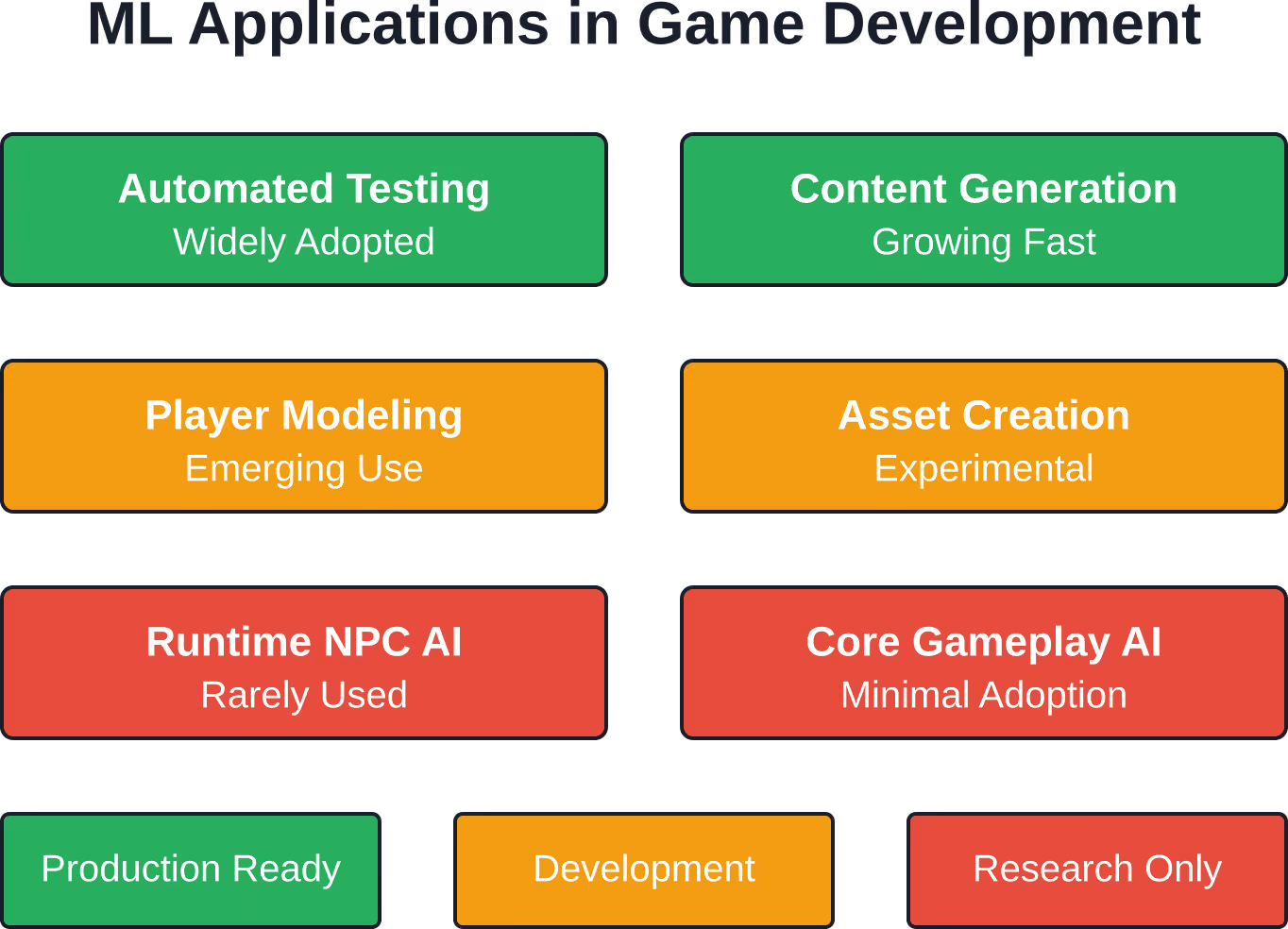
Warum Produktionsspiele maschinelles Lernen für die Kern-KI vermeiden
Die Diskrepanz zwischen Forschungsergebnissen und Produktionsrealität rührt von grundlegenden Unvereinbarkeiten zwischen den Eigenschaften des maschinellen Lernens und den Anforderungen der Spieleentwicklung her.
Debugging- und Iterationskomplexität
Die KI von Spielen muss während der gesamten Entwicklung ständig angepasst werden. Die Entwickler justieren die Aggressivität der Gegner, modifizieren Patrouillenmuster und optimieren Reaktionszeiten – in kritischen Phasen manchmal sogar täglich.
Herkömmliche Verhaltensbäume und Zustandsautomaten ermöglichen es Entwicklern, das Verhalten der KI in jeder Situation genau zu beobachten. Wenn etwas nicht stimmt, dauert es Minuten, die problematische Regel zu identifizieren. Bei Modellen des maschinellen Lernens hingegen findet der Entscheidungsprozess in Millionen von neuronalen Netzwerkgewichten statt. Zu verstehen, warum ein NPC eine bestimmte Entscheidung getroffen hat, wird zu einer äußerst schwierigen Aufgabe.
Die Spieleentwicklung erfolgt unter hohem Zeitdruck und mit häufigen Designänderungen. ML-Systeme müssen bei Parameteränderungen neu trainiert werden, was wertvolle Zeit kostet, die bei traditionellen Ansätzen nicht anfällt.
Vorhersagbarkeit und Spielerlebnis
Hier ist eine kontraintuitive Wahrheit: Die Spiel-KI sollte nicht zu gut sein. Spieler müssen schließlich gewinnen. Eine KI, die sich perfekt an jede Spielerstrategie anpasst, erzeugt Frustration statt Spielspaß.
Die Entwickler stimmen die KI sorgfältig darauf ab, dass sie zwar herausfordernd, aber dennoch bezwingbar ist und vorhersehbare Verhaltensmuster aufweist, die Spieler lernen und ausnutzen können. Maschinelles Lernen kann jedoch unbeabsichtigte Strategien entdecken, Spielmechaniken auf unspaßige Weise ausnutzen oder sich so unberechenbar verhalten, dass Spieler keine Meisterschaft erlangen können.
AlphaStars Leistung in StarCraft II verdeutlicht dies perfekt. Der Agent entwickelte übermenschliche Mikromanagement-Fähigkeiten, die sich für menschliche Spieler unfair anfühlen würden. Produktionsspiele benötigen eine KI, die Niederlagen würdevoll verkraftet und befriedigende Siege ermöglicht.
Leistungs- und Ressourcenbeschränkungen
Die Echtzeit-Inferenz neuronaler Netze für Dutzende oder Hunderte von NPCs gleichzeitig erfordert Rechenressourcen. Konsolen und mobile Geräte haben strenge Leistungsbudgets – jede Millisekunde, die für KI aufgewendet wird, steht nicht für Grafik, Physik oder Netzwerk zur Verfügung.
Traditionelle KI-Verfahren sind rechentechnisch ressourcenschonend und deterministisch. Modelle des maschinellen Lernens, insbesondere tiefe neuronale Netze, benötigen deutlich mehr Rechenleistung und Speicherplatz.
Die Revolution der generativen KI
Obwohl maschinelles Lernen die KI in Spielen zur Laufzeit noch nicht vollständig beherrscht, verändert es die Entwicklungsprozesse grundlegend. Branchenberichten zufolge werden 2025 bereits über 501.030 Spieleentwicklungsunternehmen generative KI einsetzen.
Die Anwendungsbereiche umfassen Content-Erstellung, Tests und Designunterstützung. Entwickler nutzen maschinelles Lernen, um Texturvariationen zu generieren, Layouts auf Prototypenebene zu erstellen, Platzhalterdialoge zu generieren und die Produktionsprozesse von Assets zu beschleunigen.
Laut Entwicklerumfragen gibt etwa ein Drittel der Entwickler an, dass KI-Produktivitätstools ihrem Unternehmen und der gesamten Branche zu Wachstum verhelfen werden. Den Umfragen zufolge äußert sich die Mehrheit der Entwickler positiv über KI-Technologie – eine bemerkenswerte Zustimmung in einer Branche, die Automatisierung oft skeptisch gegenübersteht.
| Anwendungsgebiet | Aktuelle Akzeptanz | Hauptvorteil | Hauptherausforderung |
|---|---|---|---|
| Automatisiertes Testen | Hoch | Umfassende Berichterstattung | Komplexität der anfänglichen Einrichtung |
| Prozedurale Generierung | Mittel-Hoch | Inhaltsvielfalt in großem Umfang | Gleichbleibende Qualität |
| Asset-Erstellung | Anbau | Beschleunigtes Prototyping | Künstlerische Kontrolle |
| Dynamischer Schwierigkeitsgrad | Niedrig-Mittel | Personalisiertes Erlebnis | Komplexität ausbalancieren |
| Laufzeit-NPC-KI | Sehr niedrig | Adaptives Verhalten | Unvorhersehbarkeit |
Deep Learning für die Inhaltsgenerierung
Deep-Learning-Modelle zeichnen sich durch ihre Fähigkeit zur Mustererkennung und -generierung aus. GANs (Generative Adversarial Networks), Transformer und Diffusionsmodelle können Texturen, 3D-Modelle, Musik und Dialoge erzeugen, für deren Erstellung menschliche Künstler Wochen oder Monate benötigen würden.
Die Musikgenerierung ist ein besonders erfolgreiches Anwendungsgebiet. ML-Modelle, die mit bestehenden Soundtracks trainiert wurden, können Variationen komponieren, die bestimmten Stimmungen, Tempi und Instrumentierungen entsprechen. Spiele können adaptive Klanglandschaften erzeugen, die auf die Aktionen der Spieler reagieren, ohne dass für jede Möglichkeit ein komplettes Orchester engagiert werden muss.
Die Textursynthese mittels neuronaler Netze erzeugt mit minimalem Aufwand hochwertige Oberflächenmaterialien. Künstler liefern Referenzbilder; das Modell generiert nahtlose Variationen, die sich für 3D-Umgebungen eignen. Dieser Workflow beschleunigt die Erstellung von Umgebungsgrafiken erheblich.
Werkzeuge und Frameworks für die Entwicklung von maschinellem Lernen
Es sind verschiedene Plattformen entstanden, um maschinelles Lernen für Spieleentwickler zugänglicher zu machen.
Unitys ML-Agents-Toolkit ist nach wie vor das führende Tool. Es bietet C#-APIs zum Definieren von Agenten, Implementieren von Sensoren und Entscheidungskomponenten sowie zum Einbetten trainierter Verhaltensweisen in Unity-Szenen. Die neueste Version unterstützt PPO, SAC und weitere moderne Reinforcement-Learning-Algorithmen.
Die Unreal Engine hat ML-Funktionen über Plugins und Partnerschaften integriert, allerdings nicht so umfassend wie die hauseigene Lösung von Unity. Drittanbieter-Tools wie TensorFlow und PyTorch lassen sich zwar mit benutzerdefinierten Pipelines integrieren, dies erfordert jedoch fundierte technische Kenntnisse.
Cloudbasierte Trainingsdienste von AWS, Google Cloud und Azure bieten die für ernsthafte ML-Experimente benötigte Rechenleistung, ohne dass lokale GPU-Farmen erforderlich sind.
Zukünftige Entwicklungen und neue Trends
Maschinelles Lernen im Gaming-Bereich entwickelt sich weiterhin rasant. Mehrere Trends deuten darauf hin, wohin die Reise geht.
Mal ehrlich: Edge-KI und On-Device-Inferenz verbessern sich stetig. Da mobile Geräte und Konsolen dedizierte neuronale Verarbeitungseinheiten integrieren, sinkt der Leistungsverlust bei maschinellem Lernen. Mit abnehmenden Rechenbeschränkungen könnten wir mehr Laufzeit-KI-Anwendungen sehen.
Hybride Ansätze, die traditionelle KI mit ML-Komponenten kombinieren, sind vielversprechend. Anstatt Verhaltensbäume vollständig zu ersetzen, könnte ML spezifische Teilsysteme übernehmen – etwa die Optimierung der Pfadfindung, das Überblenden von Animationen oder die taktische Entscheidungsfindung –, während die skriptbasierte Logik die Gesamtvorhersagbarkeit aufrechterhält.
Personalisierung im großen Stil stellt eine weitere Herausforderung dar. ML-Modelle, die sich an die individuellen Vorlieben, Fähigkeiten und Spielstile der Spieler anpassen, könnten wahrhaft personalisierte Erlebnisse schaffen, ohne dass für jede einzelne Kombination ein manueller Eingriff des Designers erforderlich ist.
Das prognostizierte Marktwachstum auf 1,4 Billionen US-Dollar bis 2033 deutet auf erhebliche Investitionen und Innovationen hin. Ob maschinelles Lernen die KI in Spielen zur Laufzeit endgültig verdrängt oder weiterhin Anwendungen während der Entwicklung dominiert, bleibt offen.
Häufig gestellte Fragen
Nutzen moderne Videospiele tatsächlich maschinelles Lernen?
Die meisten kommerziellen Spiele nutzen maschinelles Lernen (ML) trotz umfangreicher akademischer Forschung nicht für die KI im Gameplay zur Laufzeit. ML hat sich jedoch in Entwicklungsprozessen – wie automatisierten Tests, prozeduraler Inhaltsgenerierung und Asset-Erstellung – weit verbreitet. Laut Branchenprognosen von 2025 setzen bereits über 501.000 Spieleentwicklungsunternehmen generative KI für verschiedene Produktionsaufgaben ein.
Warum nutzen Spiele kein maschinelles Lernen für das Verhalten von NPCs?
Drei Hauptfaktoren schränken den Einsatz von maschinellem Lernen für KI in Spielen ein: die Komplexität der Fehlersuche (ML-Modelle sind Blackboxes, die Iterationen erschweren), die Unvorhersagbarkeit (Spieler benötigen erlernbare Verhaltensmuster, keine perfekt adaptiven Gegner) und der Leistungsaufwand (neuronale Netze benötigen Rechenressourcen, die das Budget für Grafik und Physik einschränken). Traditionelle Techniken wie Verhaltensbäume sind für die Entwicklung in der Praxis weiterhin deutlich praktikabler.
Welche Spiel-KI konnte als erste professionelle menschliche Spieler besiegen?
Google DeepMinds AlphaGo besiegte 2015 als erste KI einen professionellen Go-Spieler und erreichte diesen Meilenstein ein Jahrzehnt früher als von Experten vorhergesagt. AlphaGo entwickelte sich später zu AlphaZero weiter, das Schach, Shogi und Go durch reines Selbstspiel ohne menschliche Spieldaten meisterte. AlphaStar erreichte anschließend in StarCraft II den Großmeister-Rang und rangierte 2019 über 99,81 TP3T der aktiven Spieler.
Wie funktionieren die ML-Agenten von Unity?
Das ML-Agents-Paket von Unity unterstützt moderne Reinforcement-Learning-Algorithmen und wandelt Unity-Szenen in Trainingsumgebungen für intelligente Agenten um. Das Toolkit unterstützt Reinforcement Learning, Imitationslernen und Neuroevolution. Entwickler definieren Agenten mit Sensoren und Aktionen, trainieren Verhaltensweisen mithilfe von Python-basierten Algorithmen und betten die trainierten Modelle wieder in Spiele ein. Typische Anwendungsbereiche sind das Design von NPC-Verhalten, automatisierte Tests und die Evaluierung von Designs vor der Veröffentlichung.
Kann maschinelles Lernen ganze Spiellevel erstellen?
Ja, durch prozedurale Inhaltsgenerierung mit Deep Learning. ML-Modelle, die auf bestehenden Levels trainiert werden, können neue Layouts, Geländekonfigurationen, Dungeon-Designs und Umgebungsvariationen generieren. Dieser Ansatz ermöglicht es kleineren Teams, umfangreiche Inhaltsbibliotheken zu erstellen. Die Qualitätssicherung bleibt jedoch eine Herausforderung – generierte Inhalte müssen oft manuell überarbeitet werden, um Spielbarkeit und ästhetische Konsistenz zu gewährleisten.
Worin besteht der Unterschied zwischen Spiel-KI und maschinellem Lernen?
Spiel-KI bezieht sich traditionell auf vordefinierte Verhaltensweisen, endliche Zustandsautomaten und Verhaltensbäume – deterministische Systeme, die von Entwicklern manuell programmiert werden. Maschinelles Lernen hingegen nutzt Algorithmen, die Verhaltensweisen aus Daten oder Erfahrung lernen, anstatt sie explizit zu programmieren. Traditionelle Spiel-KI priorisiert Vorhersagbarkeit und die Kontrolle durch den Entwickler; maschinelles Lernen priorisiert Anpassungsfähigkeit und emergentes Verhalten. Trotz der Bedeutung von maschinellem Lernen in der Forschung setzen die meisten produzierten Spiele weiterhin auf traditionelle KI.
Wird KI die Spieleentwickler ersetzen?
Aktuelle Erkenntnisse deuten darauf hin, dass KI Entwickler unterstützt, anstatt sie zu ersetzen. Generative KI beschleunigt die Erstellung von Assets, automatisiert wiederkehrende Aufgaben und ermöglicht schnelles Prototyping – menschliche Kreativität, Designintuition und Qualitätsbewusstsein bleiben jedoch unerlässlich. Umfrageergebnisse zeigen, dass die Mehrheit der Entwickler KI positiv bewertet und sie als Produktivitätssteigerung und nicht als Bedrohung wahrnimmt. Die Technologie verändert Arbeitsabläufe, hat aber die zentralen kreativen Rollen, die die Spieleentwicklung prägen, nicht verdrängt.
Schlussfolgerung
Maschinelles Lernen in Videospielen bietet ein faszinierendes Forschungsfeld, das die Kluft zwischen Forschungspotenzial und Produktionspraxis beleuchtet. Während bahnbrechende Errungenschaften wie AlphaGo, AlphaStar und die übermenschlichen Atari-Agenten die außergewöhnlichen Fähigkeiten des maschinellen Lernens demonstrieren, setzen die meisten veröffentlichten Spiele für ihr Laufzeitverhalten weiterhin auf traditionelle KI-Techniken.
Die eigentliche ML-Revolution in der Spielebranche findet im Hintergrund statt – in automatisierten Testumgebungen, prozeduralen Generierungspipelines und Workflows zur Inhaltserstellung. Da der Markt von 1,4 Billionen US-Dollar im Jahr 2024 auf voraussichtlich 1,4 Billionen US-Dollar im Jahr 2033 anwächst, werden Anwendungen, die während der Entwicklungsphase eingesetzt werden, die kurzfristige Verbreitung voraussichtlich weiterhin dominieren.
Doch die Hardware verbessert sich, Algorithmen entwickeln sich weiter und hybride Ansätze entstehen. Das nächste Jahrzehnt könnte Forschung und Produktion endlich verbinden und sowohl die von ML versprochene Anpassungsfähigkeit als auch die für die Produktion notwendige Vorhersagbarkeit liefern. Entwicklern, die diese Techniken erkunden möchten, bieten Tools wie Unitys ML-Agents einen einfachen Einstieg, ohne dass ein Doktortitel in maschinellem Lernen erforderlich ist.
Die Zukunft der KI in Spielen wird weder rein traditionell noch rein erlernt sein – sie wird intelligent hybrid sein und die Stärken beider Ansätze nutzen. Diese Zukunft wird bereits heute gestaltet, Schritt für Schritt, mit jedem trainierten Agenten und jedem generierten Asset.
 German
  English
  Arabic
  French
  Dutch
Dutch  Spanish